



 English
by Valentina Melini and Francesca Melini, CREA Research Centre for Food and Nutrition (Rome, IT)
Project rationale
Sustainable foods are foods produced and consumed in ways that are good for both the planet and human health. They help reduce environmental impact, protect natural resources, and promote a healthier and more sustainable food system.
Legumes are seeds of plants that are considered sustainable foods because they require relatively little water and land to grow and provide a good source of plant-based protein. Legume flours can also be used to produce sustainable foods, offering a nutritious and environmentally friendly alternative to traditional ingredients.
Innovative ingredients can also be obtained from agri-food by-products, transforming food waste into valuable and sustainable resources. This approach helps reduce waste while promoting the development of healthier and more environmentally friendly foods.
With these concepts in mind, we can now explore the exhibition and discover innovative and sustainable food solutions.
Let’s explore the exhibition space!
Welcome to our exhibition space.
Here, agricultural materials, including seeds, and food by-products are showcased through a journey of transformation: from fresh plant materials to dried fractions, powders and new food ingredients, and finally to bakery products such as breads, biscuits and savoury snacks.
From raw materials to ingredients
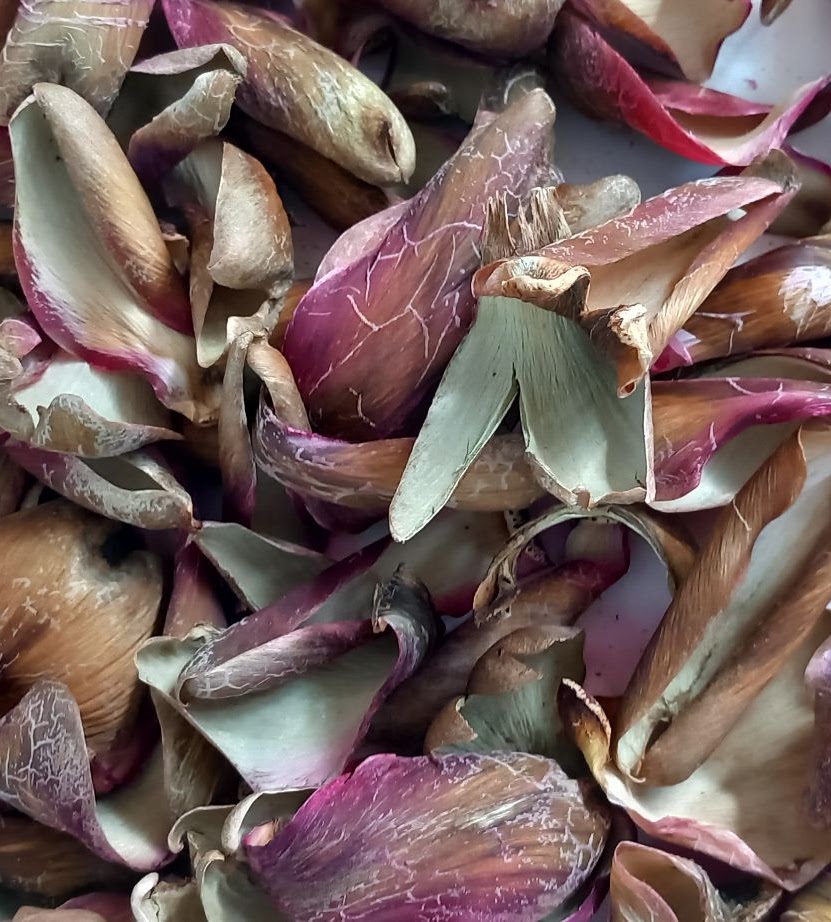
Fruit, vegetables and legume seeds contain a complex range of nutrients, dietary fibre and bioactive compounds distributed across different tissues. Yet not all plant fractions enter the human food chain in the same way.
Peels, leaves, outer bracts and other plant fractions may have sensory characteristics or limited suitability for direct consumption. This often results in their disposal, with associated economic and environmental costs, despite retaining valuable nutritional and bioactive compounds.
The first step in food upcycling is therefore to look beyond the conventional edible portion and recognise the potential value of materials that are often overlooked.
Step 1
Stabilizing valuable plant materials
Through drying, milling and, in some cases, extraction with food-grade solvents, materials generated along the food chain can acquire a new role as ingredients for food innovation.
Drying reduces moisture and increases storage stability, allowing plant materials to be preserved and further processed.
The resulting dried fractions can retain important components of the original plant matrix, including dietary fibre and a variety of bioactive compounds.
Drying is therefore a key technological step in transforming a perishable material into a more stable resource for ingredient development.
Step 2
Milling to powders
Once dried, plant materials can be milled into powders. Milling increases their versatility and makes them easier to incorporate into food formulations.
Their technological and compositional characteristics can influence the colour, texture, flavour and nutritional profile of the resulting foods.
Step 3
Flour-powder blends
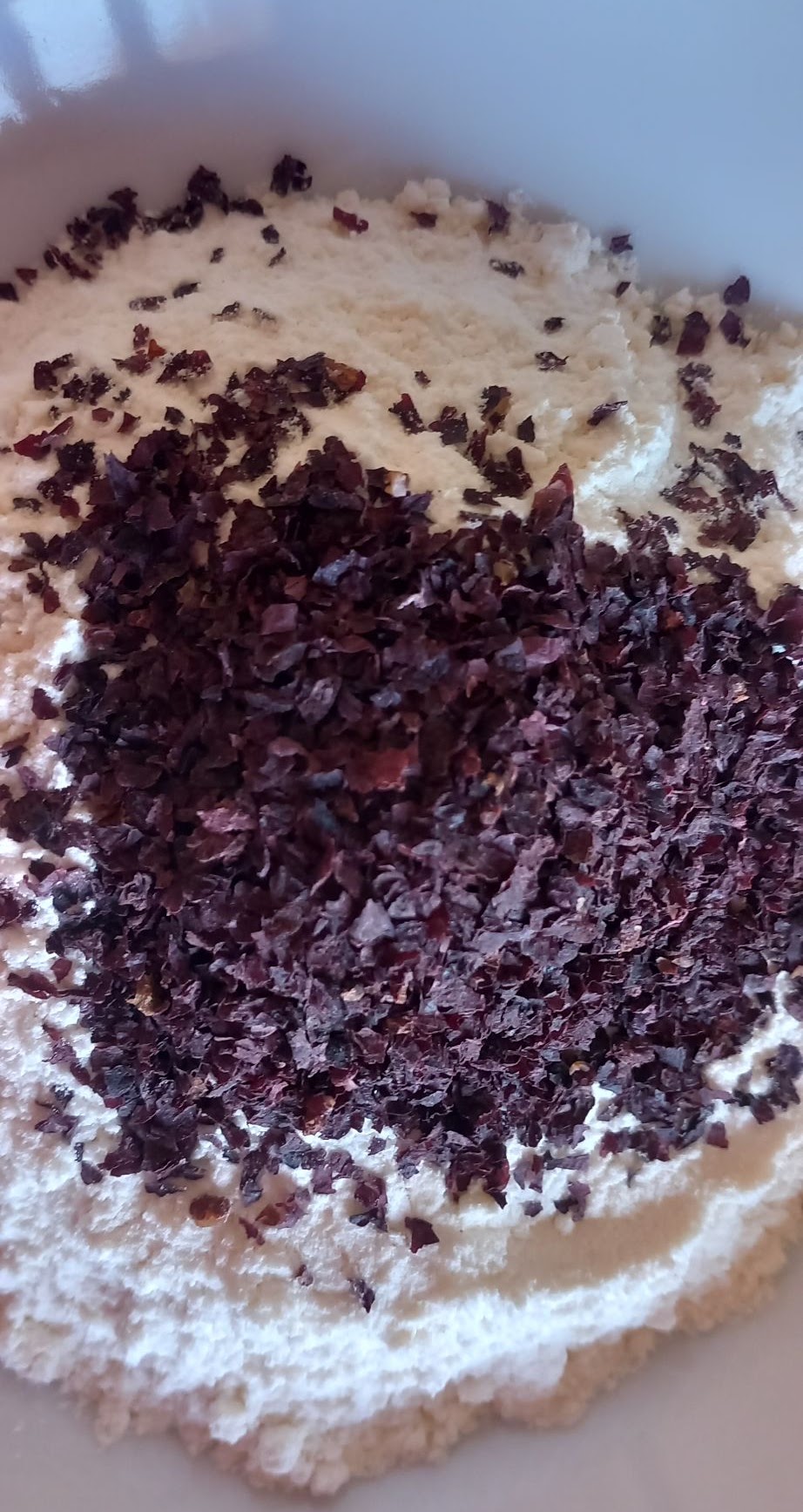
The next step is to prepare blends of powders and cereal – both conventional and gluten-free – and investigate how recovered plant materials behave when incorporated into baking food ingredients.
Different incorporation levels allow researchers to investigate their effects on dough properties and, ultimately, on the characteristics of the final food.
Food upcycling is therefore not simply a matter of adding a by-product to a recipe. It requires understanding the relationship between composition, processing, technological performance and food quality.
Step 4
Innovative Foods – The research becomes edible
Bread
Gluten-free bread with artichoke outer bract powder
Gluten-free bread containing different percentages of artichoke outer bract powder can help meet the increased dietary fiber and antioxidant needs of people with celiac disease.
Different inclusion levels have been explored to investigate how the recovered ingredient affects the structure, texture, appearance and overall characteristics of the final product.
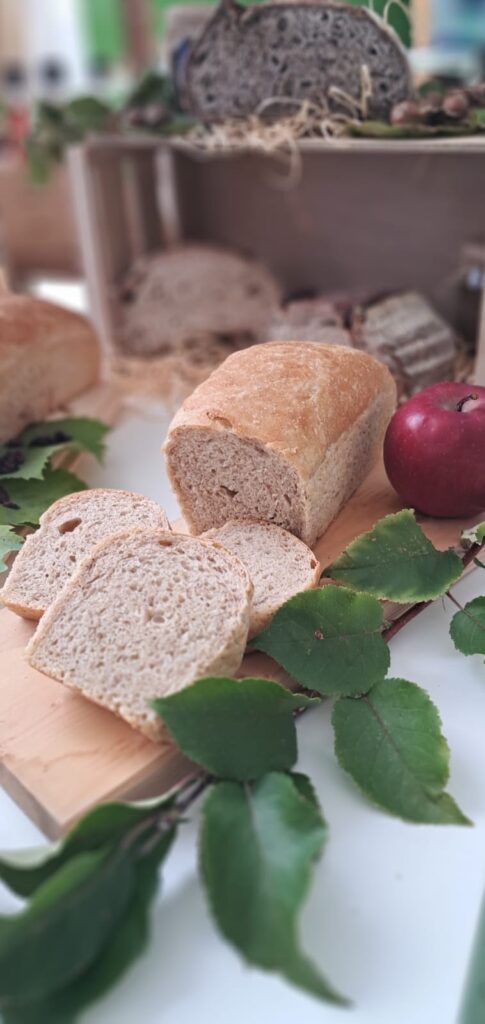
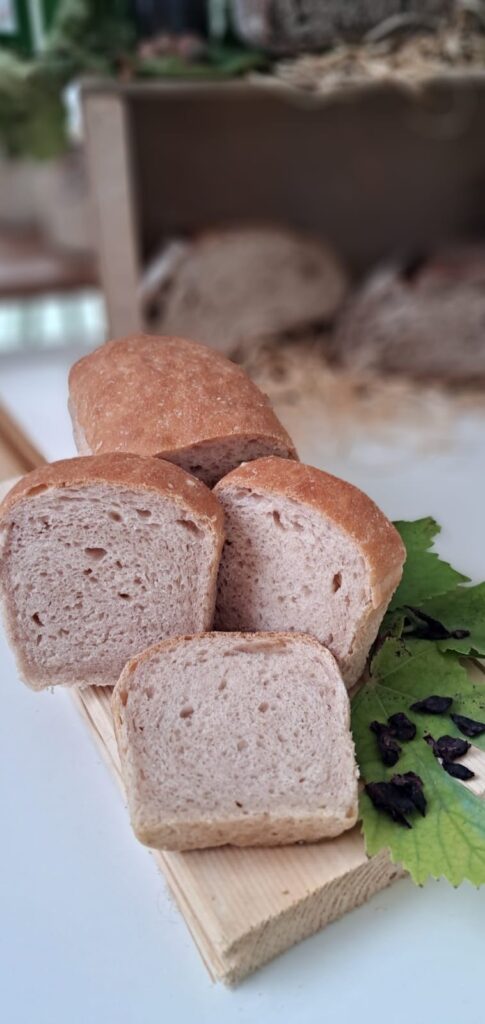
Wheat bread with red grape pomace & wheat bread with red apple peel powder
These two breads demonstrate two complementary approaches to food upcycling:
- Extraction allows the recovery and incorporation of selected compounds.
- Powder direct incorporation allows the use of the plant-derived material as an ingredient.
Sourdough wholewheat bread
A traditional sourdough bread made only with locally grown, organic wholewheat flour is prepared with the addition of hazelnut skins, which are a common agro-industrial side-stream.
Bakery products
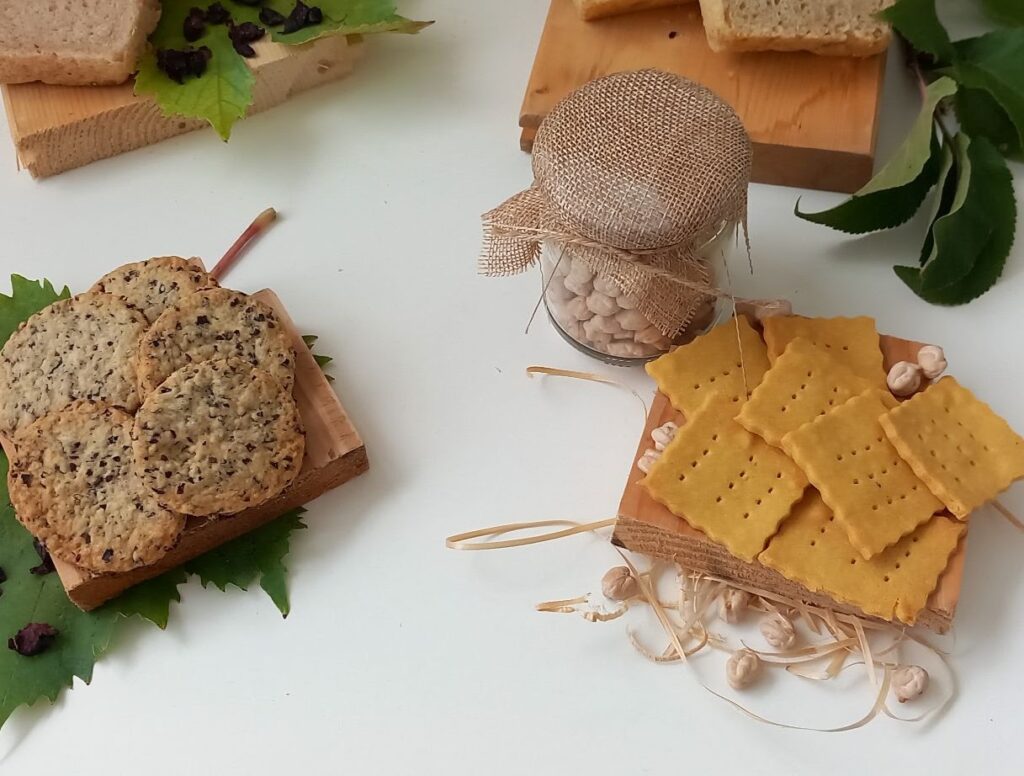
From grape-processing by-product to baked food: biscuit formulations
Red grape pomace is the solid material remaining after grape processing. It contains valuable components, including dietary fibre and bioactive compounds, making it an interesting candidate for food upcycling.
The biscuit formulations illustrate how the incorporation of an upcycled ingredient can modify the characteristics of a familiar food.
A new savoury food format: how a raw material can become an ingredient
Chickpeas are an important source of plant protein and other valuable nutrients. Milling transforms the whole pulse into a versatile ingredient that can be incorporated into a range of food products.
The crackers demonstrate how a familiar agricultural resource can be transformed into a new food format.